
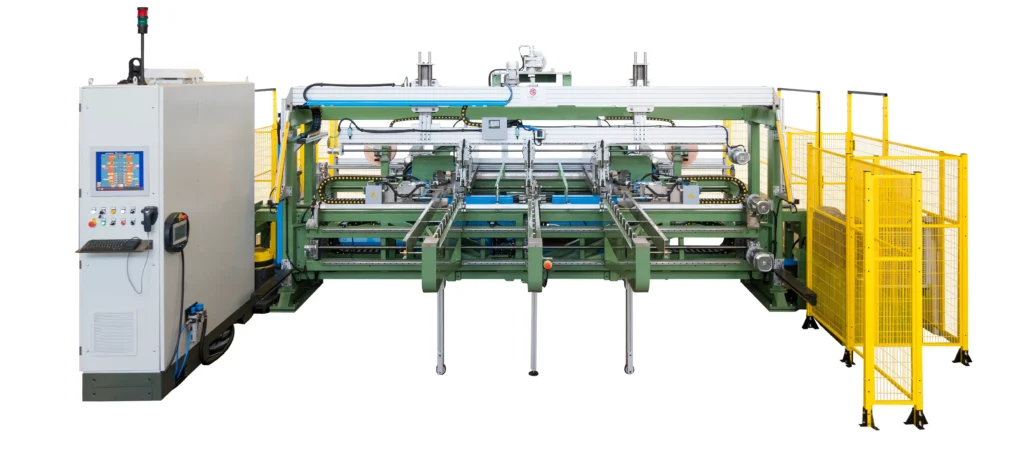
You’re finishing tubular heating elements after MgO filling, and the last stretch of production, final calibration, sealing, and testing, is often where inconsistency creeps in if it’s split across separate machines. This transfer line brings all of it together, so every element leaves the line at the exact length you need, sealed against moisture, and electrically verified.
You get final-length stretching, end preparation, MgO fill inspection, sealing, end tapering, and electrical testing on one continuous line. Fewer handoffs, tighter consistency, and a finished element ready for the next stage of manufacturing.
The concrete advantages that make the difference

Right now these steps may be running across separate stations, with parts moving by hand between calibration, sealing, and test. This transfer machine handles the entire sequence in one automated pass, so you cut handling, shorten your production time, and reduce the chance of a part getting mishandled between stations.
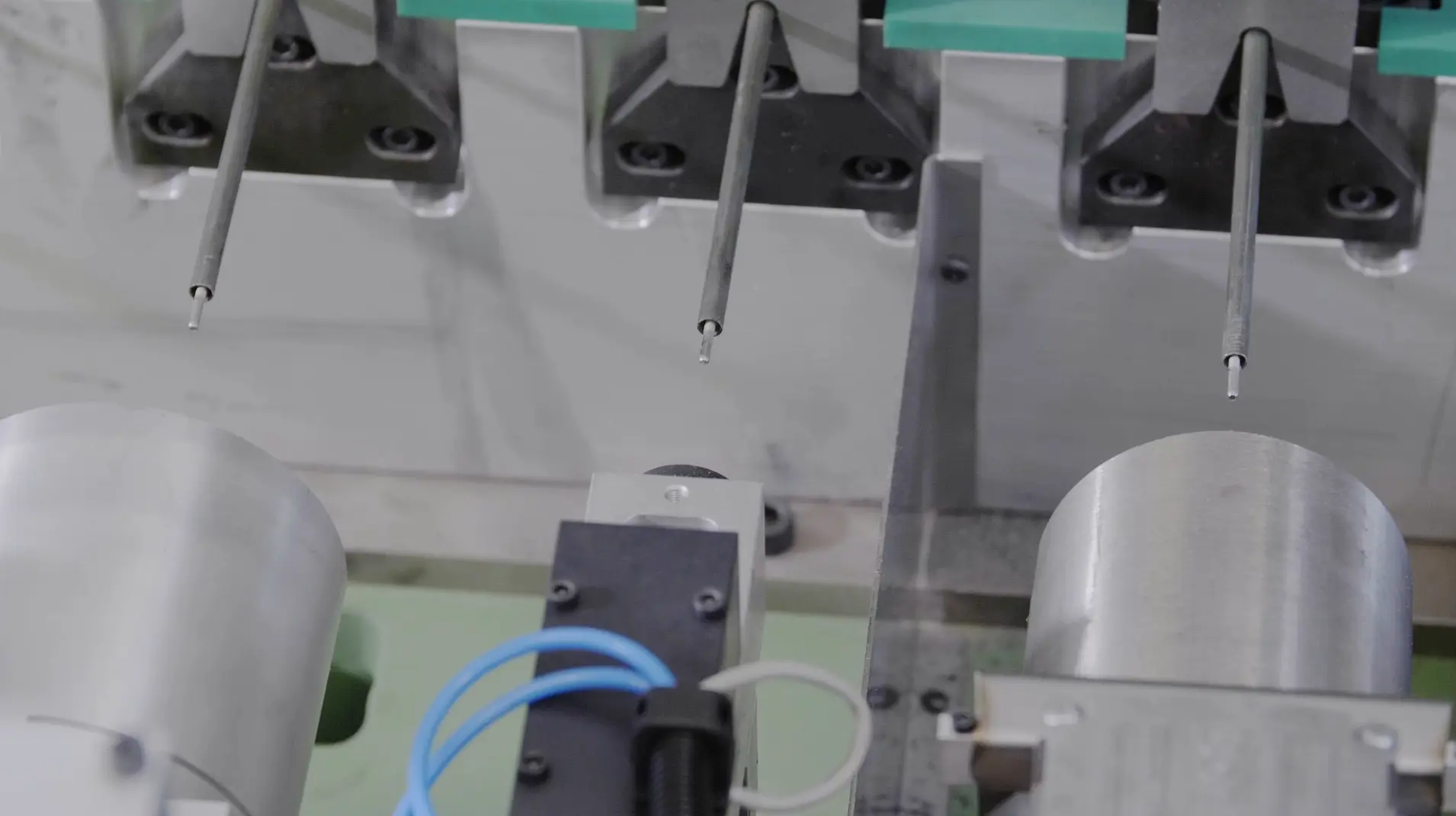
An inconsistent magnesium oxide fill means inconsistent performance and inconsistent quality claims. Dedicated measuring and leveling stations check the depth of the MgO fill on every element and level it to the same value, so what you ship matches what you specify, not just on average, but on each part.
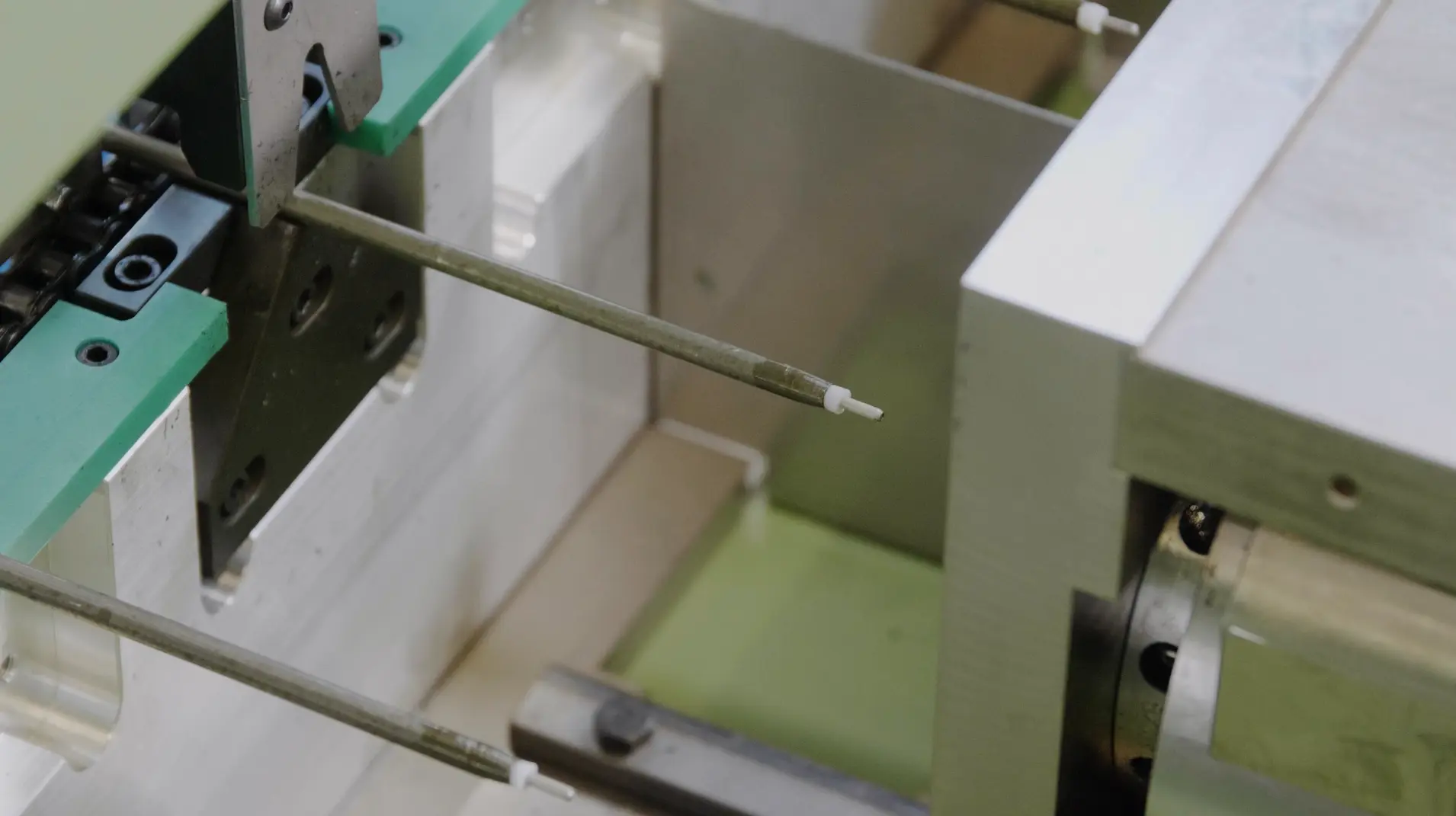
MgO is hygroscopic. If moisture gets in before the element is sealed, you get a part that fails downstream or in the field. This line seals each element with a silicone compound and a PTFE gasket, then runs dielectric strength and ohmic value testing on every piece before it’s unloaded, with rejects automatically sorted out.
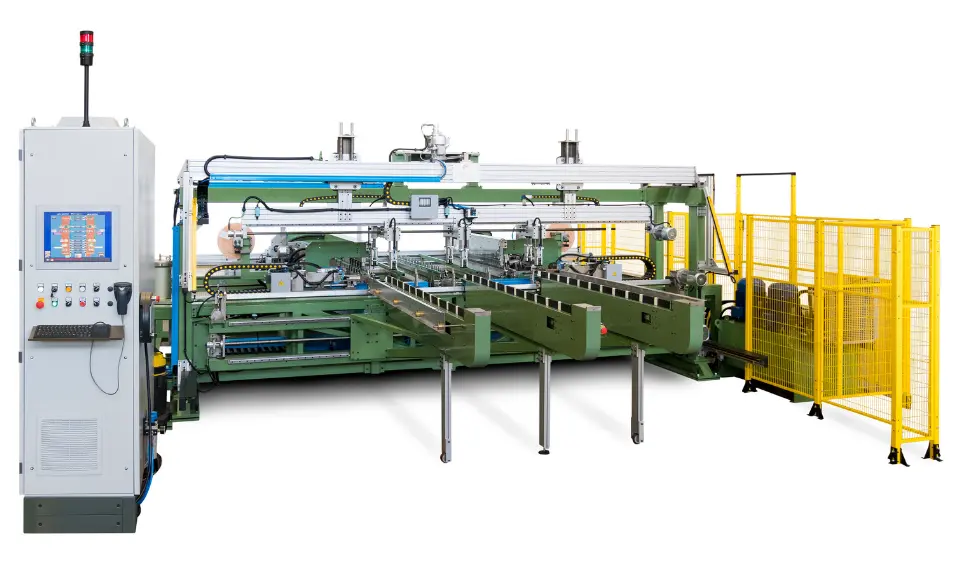
Your element enters the line after MgO filling and leaves it stretched to final length, sealed, and electrically tested. A transfer system carries each part automatically through every station, so nothing needs to be handled by hand along the way.
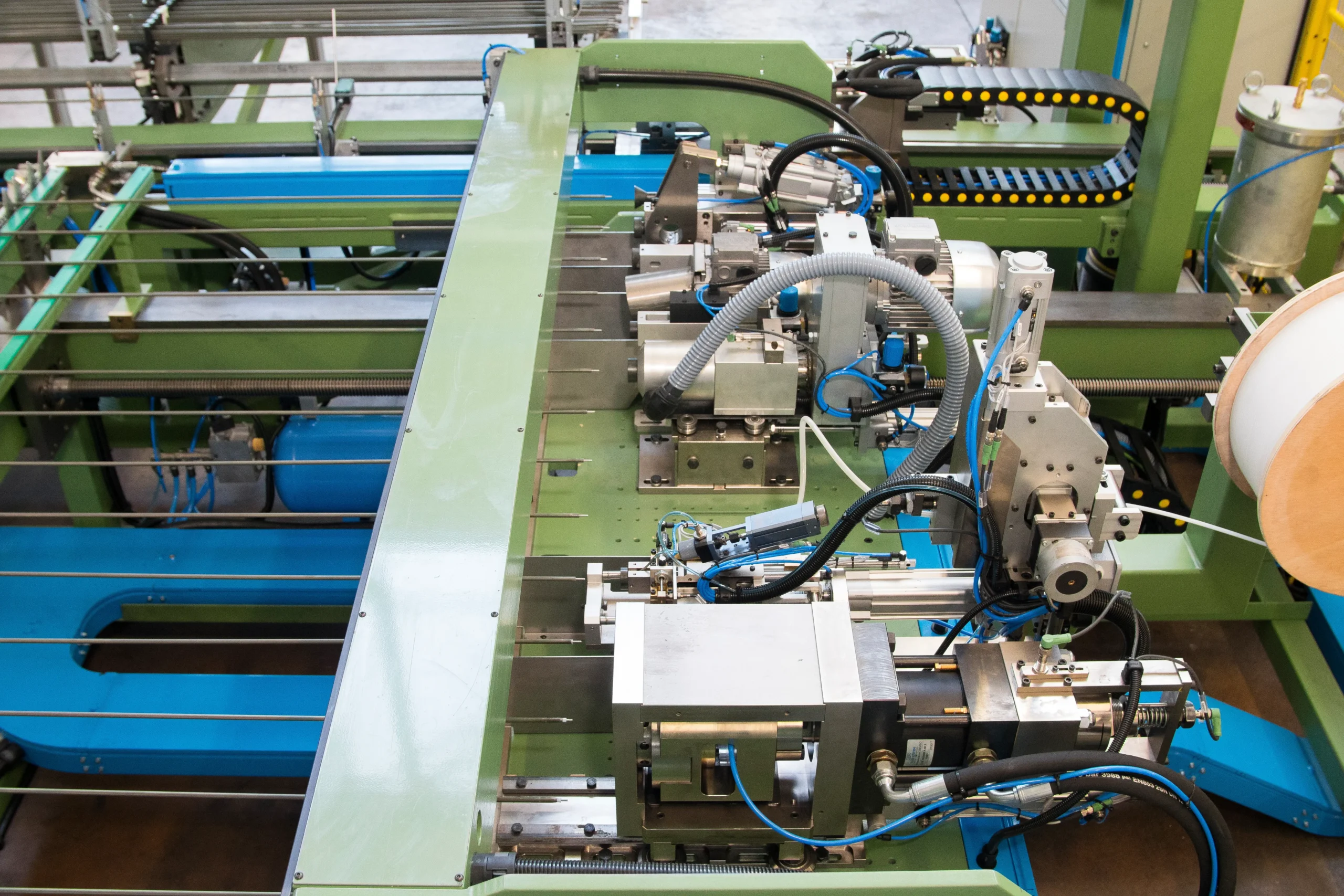
The line starts by loading elements from a high-capacity flight-bar feeder and placing each one precisely into the stretching station, where it’s pulled to its final calibrated length. From there, it’s centered for accurate downstream processing, and the terminal pin is cropped to length and inspected to confirm the cut meets spec. The pin end is then chamfered by roll-forming for a smooth, consistent finish.
Next, the machine checks the MgO fill: a probe measures fill depth on each element, and a pneumatic leveling tool removes any excess oxide so every part sits at the same fill level. The element is then sealed, first with a silicone-based compound sprayed inside to block moisture, then with a PTFE gasket cut from continuous Teflon cord and inserted to complete the seal. The end is tapered afterward to lock that seal mechanically in place.
Before it leaves the line, every element goes through dielectric strength and ohmic value testing, and the automatic unloading station sorts finished parts from rejects, separating mechanical and electrical failures into their own bins.