
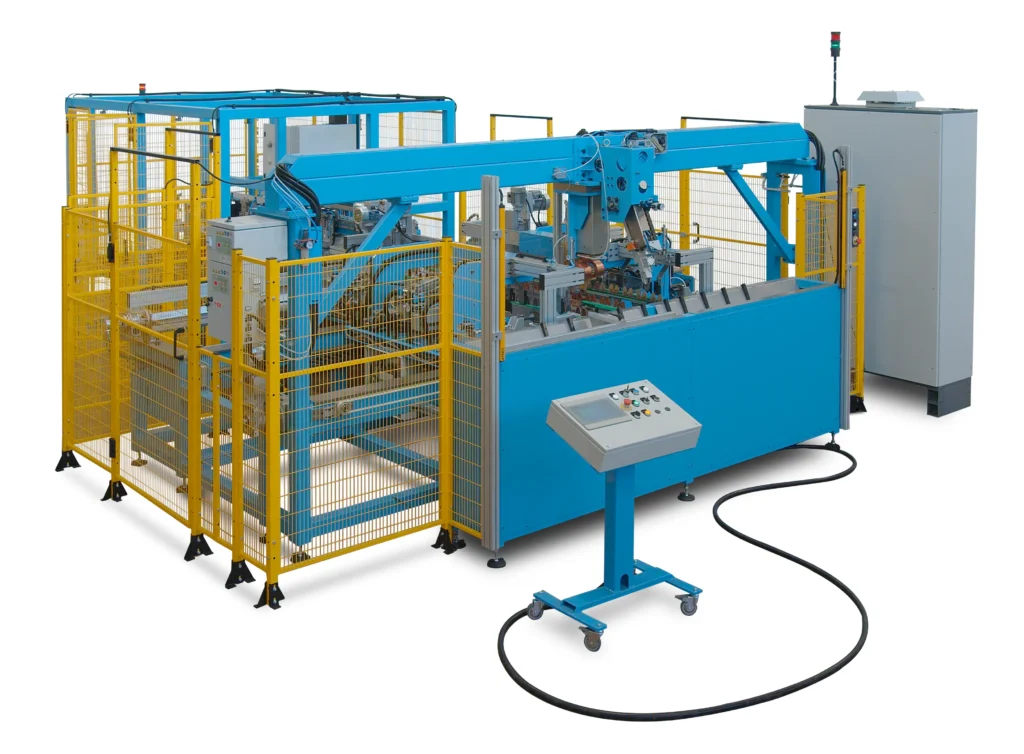
End-finishing, Annealing and U-bending Transfer for Water Heater Elements
You’re producing tubular heating elements for water heaters, and every extra handoff between machines costs you time, floor space, and consistency. This transfer machine takes your element from raw tube end to a tested, U-shaped, assembly-ready part, without moving it between separate stations.
You get end preparation, localized annealing, U-bending, and electrical testing in one continuous line. That means fewer operators, fewer handling steps, and a part that’s ready to ship the moment it comes off the machine.
End-finishing, Annealing and U-bending Transfer for Water Heater Elements
Advantages
The concrete advantages that make the difference
Everything in one line, so you cut handling and floor space
Right now you may be running separate machines for annealing, bending, and testing, and moving parts between them by hand or by cart. This transfer machine puts all of it on one line. You free up floor space, remove manual transfers, and cut the labor tied up in moving parts from station to station.
Bends that hold up, because the material is ready for them
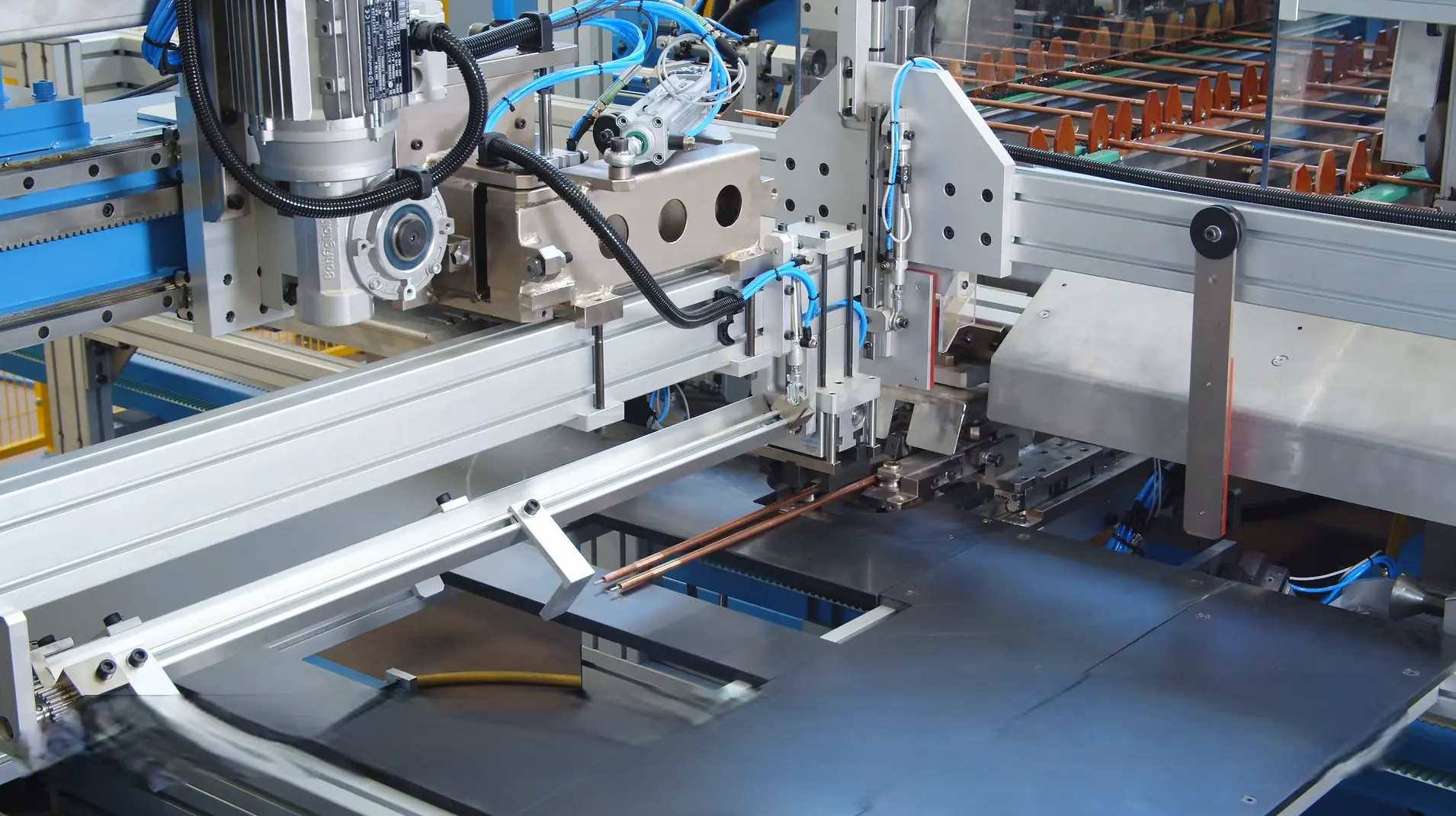
A U-bend puts real stress on a tube wall. If the material isn’t prepared for it, you get cracks at the bend and parts you can’t ship. Localized annealing softens the exact zone that’s about to be bent, so your elements come out with a clean, consistent bend geometry, batch after batch.
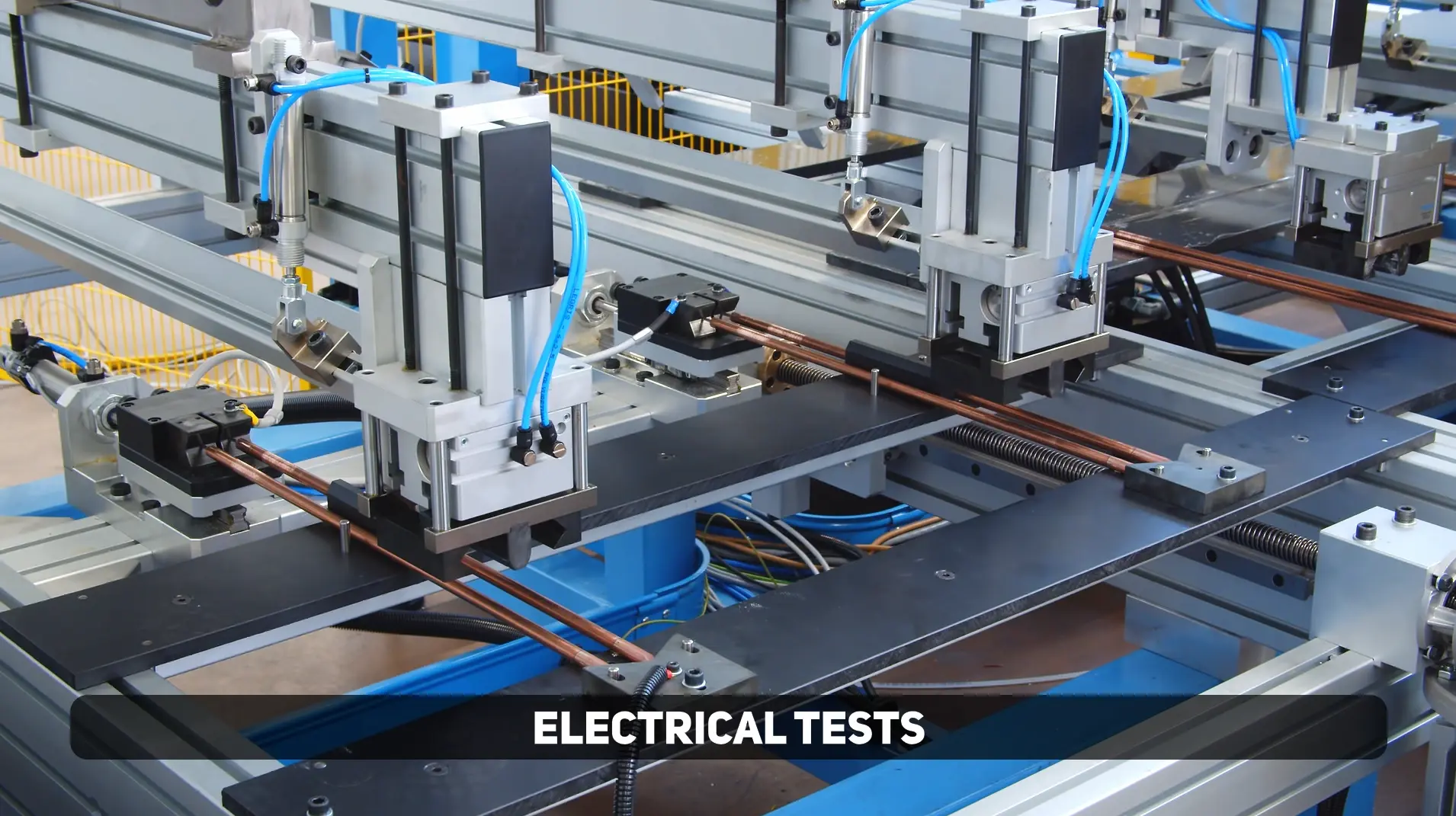
Every part tested before it leaves the line
You shouldn’t have to find out about a bad element after it’s already in a customer’s water heater. Built-in dielectric strength and ohmic value testing checks every single part before it’s unloaded, and rejects are automatically sorted out. What reaches your finished-goods bin is production-ready.
Details
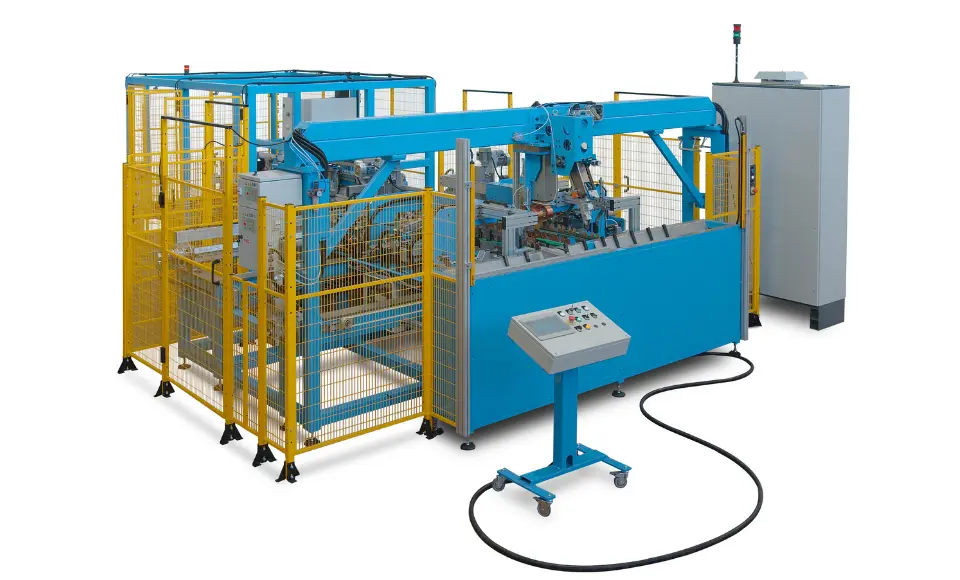
Your tube enters the machine as a straight element and leaves it as a finished, tested U-shape. The line is split into two connected sections, and a transfer system moves each part automatically from one to the next, so nothing needs to be touched by hand along the way.
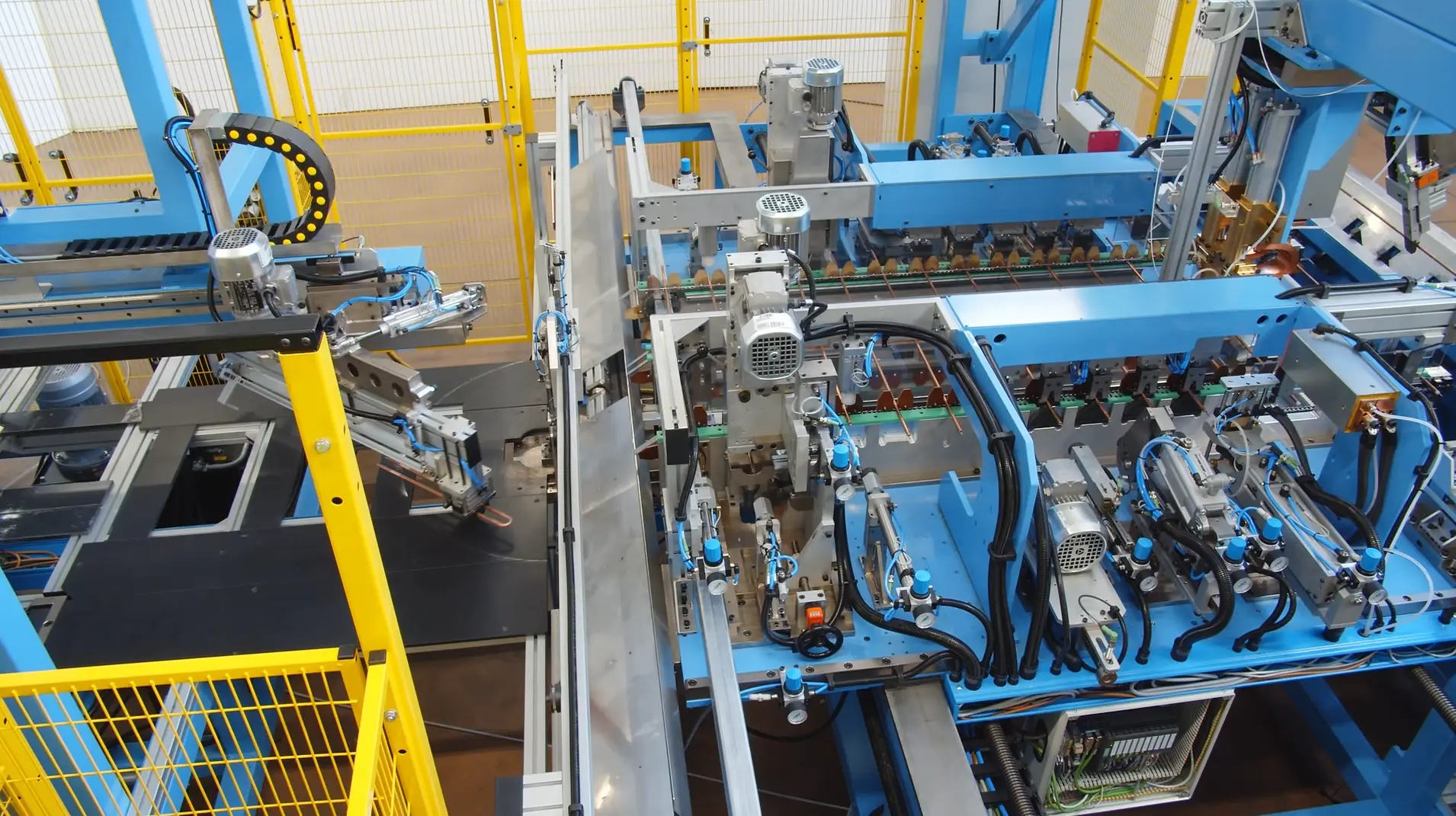
In the first section, the machine prepares the ends: it picks each element and loads it automatically, applies a quick localized current to anneal the future bend zone, then water-quenches it so the part is ready to bend without cracking. From there, it removes the filling plug (with pre-heating built in for plugs that would otherwise be hard to pull), trims the pin to length, chamfers it for a clean finish, and sands the worked end so it’s ready for welding or brazing.
In the second section, the element gets its final shape and its final check. It’s bent into a U with automatic centering to keep both legs aligned, then the bend is squeezed to tighten leg spacing and re-pressed to seal any surface cracking from the bend itself. Finally, every part goes through dielectric and ohmic testing, and the line separates good parts from rejects automatically as it unloads.
You don’t manage six separate operations. You load raw elements at one end and collect tested, finished parts at the other.